
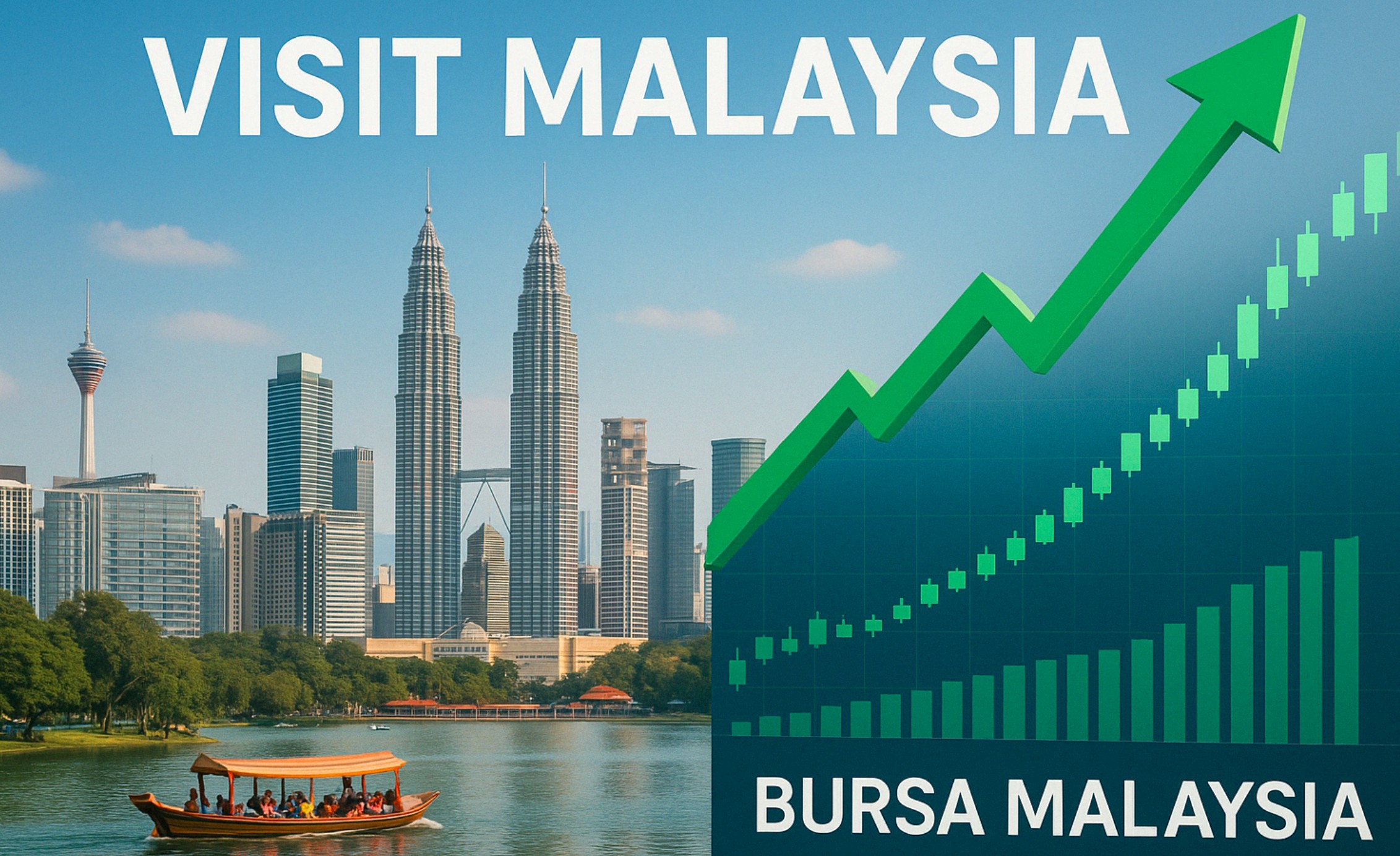
On April 16, 2025, the FTSE Malaysia KLCI closed at 1,476.02, down 0.64% or 9.67 points for the day. Year-to-date, it has fallen 10.07%, showing a tough year for the index. The FBM Mid 70 dropped to 14,526.10 (-0.80%), and the FBM Small Cap ended at 14,515.23 (-0.50%). Trading was active with a volume of 2,699 million units, valued at RM 3,356 million.
Key Movers and Shakers on the KLCI
Top Gainers
- Dairy Champ Industries Bhd rose to RM 22,500, gaining 7.00% with a volume of 863.4K shares. Its YTD increase is 8.59%, and its market cap is RM 13,399 million.
- Khind Holdings Bhd closed at 2,660, up 0.380%, with 53.3K shares traded. Its market cap is RM 117.7 million.
Top Losers
- Nestlé (Malaysia) Bhd fell to RM 77,040, down 2.220%, with a volume of 194.7K shares. Its YTD drop is 22.94%, signaling struggles in the consumer sector.
- Hong Leong Financial Group Bhd ended at RM 16,820, down 0.480%. Its YTD decline is 10.16%.
Most Active Stocks
- Pertama Digital Bhd led with 83.24 million shares traded but stayed flat at RM 0.010.
- MyEG Services Bhd saw 41.42 million shares traded, also unchanged at RM 0.035.
Policy Impacts Affecting the KLCI
Malaysia’s Economic Landscape
Bank Negara Malaysia is taking a cautious approach to trade tariffs. On April 10, 2025, Governor Abdul Rasheed Ghaffour said the central bank would wait for clarity on global tariffs before adjusting its 2025 growth forecast of 4.5% to 5.5%. This uncertainty likely contributed to the KLCI’s decline, as investors remain wary of trade disruptions. Additionally, Malaysia overtook China as Thailand’s top tourist source in early April 2025, with 1.23 million visitors. This shift may boost tourism-related stocks on Bursa Malaysia in the coming months.
Global Trade Tensions
Global markets have been volatile due to U.S. President Donald Trump’s tariff policies. After imposing a 145% tariff on China, Trump paused tariffs on other countries for 90 days on April 9, 2025, causing a historic rally with the S&P 500 jumping 9.52%. However, the relief faded quickly. By April 10, the Dow dropped 1,000 points, and the KLCI followed suit, slipping below 1,500 to 1,454.22 on April 7. Goldman Sachs lowered China’s 2025 GDP growth forecast to 4% due to these tariffs, which could reduce demand for Malaysian exports like electronics and commodities.
A significant development occurred on April 16, 2025. Chinese President Xi Jinping visited Kuala Lumpur, meeting with Malaysian King Sultan Ibrahim Sultan Iskandar and Prime Minister Anwar Ibrahim. Xi pushed for free trade, positioning China as a source of “stability and certainty.” This visit might lead to stronger trade ties between Malaysia and China, potentially cushioning the KLCI from further tariff-related declines.
Currency and Market Sentiment
The ringgit weakened against the USD, with the USD/MYR rate at 4.1530, up 1.324% YTD. It also fell against the SGD, with SGD/MYR at 3.3586, up 2.1735% YTD. A weaker ringgit could attract foreign investors to undervalued stocks but raises costs for imports, impacting firms like Nestlé (Malaysia) Bhd.
What’s Next for KLCI Investors?
The KLCI’s outlook remains cautious. Investors might find opportunities in stocks like Dairy Champ Industries Bhd, which is showing strong growth. However, keep an eye on global trade policies and Malaysia-China relations, especially after Xi’s visit. For stability, consider utility stocks like Petronas Dagangan Bhd, which only fell 0.22% on the day.
Sources: Bursa Malaysia data, Reuters, AP News