
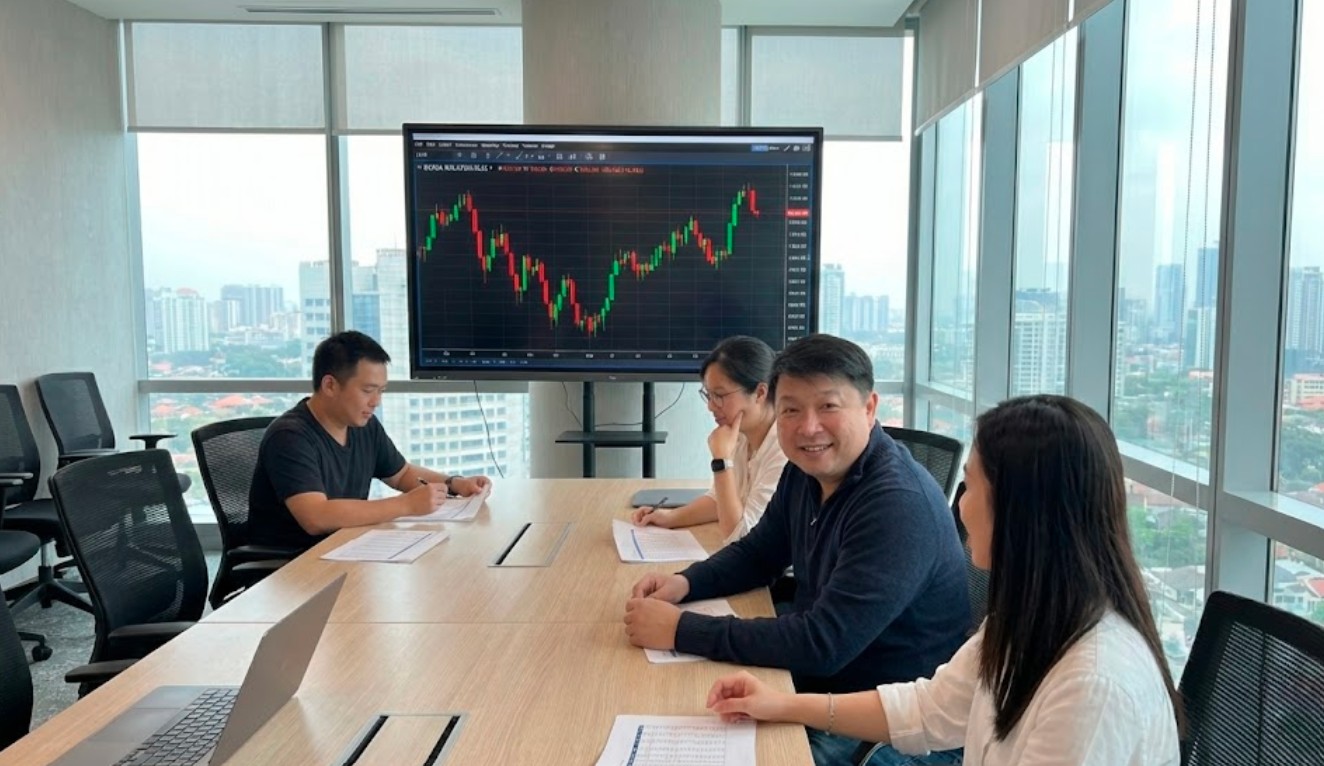
The FTSE Bursa Malaysia KLCI (KLCI) snapped its five-session winning streak. It closed lower at 1,712.74 on January 16. This was down 2.42 points or 0.14% from the previous close of 1,715.16. The index hit a seven-year high early, opening at 1,717.63 and reaching 1,721.48. However, profit-taking pulled it down to a low of 1,711.54 by midday before a slight recovery. Trading volume was moderate. Decliners outnumbered gainers, showing caution amid global uncertainties and Wall Street weakness.
Movers and Shakers
The KLCI’s dip stemmed from profit-taking in plantations and financials. Yet, selective buying in heavyweights cushioned the fall. Plantations dropped 0.75%, while financials eased 0.21%. Tech and consumer sectors held firm. Notable top gainers included:
- PPB Group: Up 38 sen to RM10.98 on consumer strength.
- MISC: Rose 20 sen to RM7.80 amid logistics gains.
- MR DIY: Gained 4 sen to RM1.58, tied to tourism recovery.
- Petronas Chemicals (PCHEM): Added 8 sen to RM3.28 despite volatility.
- Maybank: Up slightly on banking resilience.
Top losers hit plantations hard:
- United Plantations (UTDPLT): Down 1.28 to RM31.70.
- Kuala Lumpur Kepong (KLK): Fell 0.54 to RM20.00.
- Sime Darby Plantation: Dropped amid commodity swings.
High-volume actives featured tech and consumer plays. Analysts eye a rebound, targeting 1,730-1,850 by end-2026 on 8% earnings growth, led by banks and infrastructure.
Policy Changes Impacting KLCI and Malaysia’s Market
Domestically, the 13th Malaysia Plan (13MP) drives reforms. It focuses on digitalisation, high-tech growth, and sustainability. Budget 2026 broadens revenue via SST expansion, e-invoicing, and green incentives. These support 4.5% GDP growth, aiding renewables and infrastructure sectors. GEAR-uP targets RM120 billion in investments by 2028. NIMP 2030 and AI Action Plan boost tech. A carbon tax on high emitters aligns with ESG goals.
Globally, US tariffs (25% on Iran-trading nations) loom. But Malaysia’s semiconductor exemptions (40% of exports) and October 2025 US-Malaysia deal soften blows. Growth may hold at 4.3-4.5%. Ringgit stability at RM4.06/USD and OPR at 2.75% aid liquidity. WEF notes risks like downturns, inflation (1.8%), and asset bubbles. New alliances cushion geoeconomic tensions.
Other News Potentially Impacting KLCI or Malaysia’s Market
- Sunway-IJM Merger Talks: A potential $2.7 billion deal to form Malaysia’s largest construction firm. It boosts infrastructure amid data centers and 13MP spending.
- Export Outlook: 2025 growth hit 4.9%, with Q4 at 5.7%. But 2026 moderates to 4.3-4.5% on tariffs. E&E, tourism (Visit Malaysia 2026), and mining drive it. Trade surplus aids ringgit.
- Sector Themes: AI/data centers position Malaysia as “China+1” hub. M&A in renewables grows. Palm oil output dips to 19.5-19.8 million tonnes. Sukuk issuance rises to $264.8 billion in 2025, supporting finance.
- Broader Risks: Geopolitical tensions (US-Iran, China tariffs) add uncertainty. Fed pause on rates, asset bubbles loom. Yet, reforms and alliances provide buffers.
The KLCI shows resilience for 2026. Reforms and tailwinds support it. But monitor external risks.