
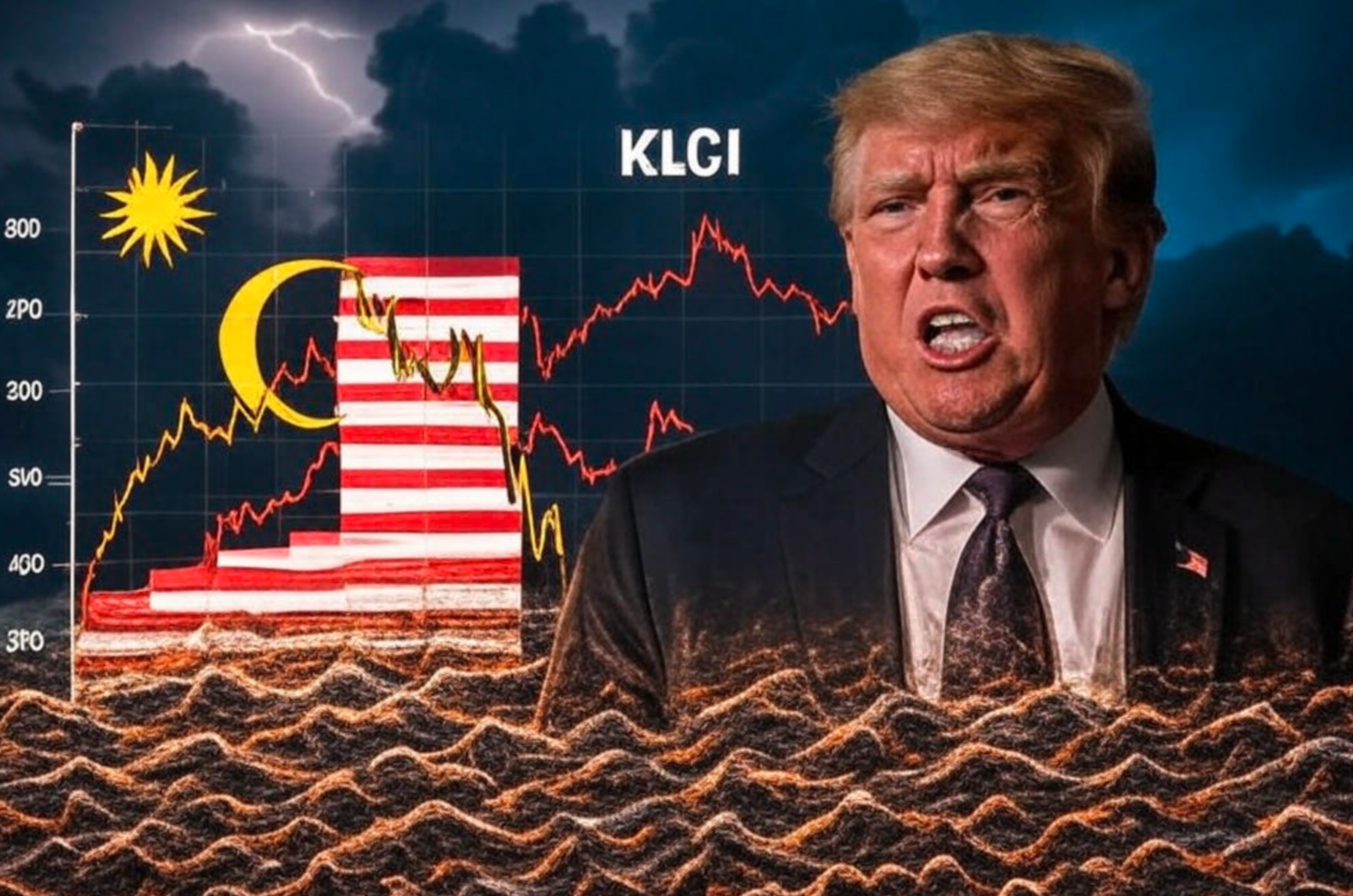
Welcome to the weekend edition of klci.net! As we sip our morning coffee on this Saturday, April 5, 2025, the world economy is reeling from the latest round of U.S. tariffs that kicked off earlier this week. President Donald Trump’s sweeping trade policies, announced on April 2 and implemented as of April 5, have sent shockwaves through global markets, and Malaysia’s KLCI is no exception. With the dust still settling, let’s unpack the impact, explore what’s ahead, and decide whether it’s time to batten down the hatches or seize new opportunities.
The Tariff Tsunami Hits: What’s Happening?
On April 2, 2025, Trump unveiled a bold tariff regime in the White House Rose Garden, slapping a baseline 10% levy on all U.S. imports, with steeper duties—up to 49%—on specific countries like Cambodia and China. By April 5, U.S. customs agents began collecting these tariffs, triggering a global market meltdown. The S&P 500 shed nearly $5 trillion in value over two days, oil prices tanked to their lowest in over three years, and China retaliated with 34% tariffs on U.S. goods. Asian markets, including Japan’s Nikkei 225 and South Korea’s Kospi, opened lower on Friday, April 4, extending the sell-off.
For Malaysia, a trade-dependent economy, the stakes are high. The KLCI, which tracks the performance of Malaysia’s top companies, has felt the heat. Export-oriented sectors like palm oil, electronics, and manufacturing—key drivers of the index—are under pressure as global supply chains buckle. Palm oil, a Malaysian staple, faces uncertainty as Trump’s tariffs on Indonesia and Malaysia (major palm oil exporters) threaten to disrupt trade flows. Meanwhile, tech firms on the KLCI, reliant on U.S. demand, are bracing for higher costs and shrinking margins.
KLCI in the Crosshairs: Early Signs of Strain
As of this morning, April 5, 2025, at 6:34 AM PDT, the KLCI’s reaction has been muted but telling. While precise figures for today’s trading session aren’t yet available (weekend markets are closed), Thursday’s global rout saw Asian indices slide, and analysts expect the KLCI to open lower on Monday, April 7. The index’s heavy weighting in export sectors makes it vulnerable to U.S. tariffs and retaliatory measures from trading partners like China. Economists at Oxford Economics warn that global growth could dip to its lowest since 2008 (outside the COVID era), a scenario that could drag the KLCI down with it.
Yet, it’s not all doom and gloom. Malaysia’s government is already mobilizing. Acting on cues from South Korea’s emergency support measures, Malaysian officials are likely analyzing tariff impacts and negotiating with Washington to soften the blow. The 10% baseline tariff on Britain—a key Malaysian trading partner—offers a glimmer of hope, as it’s lower than rates imposed on other Asian nations. Could this give the KLCI a relative edge?
What to Look Forward To: Opportunities Amid Chaos
Looking ahead, the next few weeks will be pivotal. Here’s what KLCI investors should watch:
- Negotiation Outcomes: Trump has hinted at openness to tariff talks if countries offer “something phenomenal.” Malaysia’s trade ministry could leverage its strategic position—think semiconductors and palm oil—to secure exemptions or lower rates. A deal could stabilize the KLCI.
- Domestic Resilience: Companies like Petronas and Tenaga Nasional, with strong domestic footholds, may weather the storm better than export giants. A shift in KLCI weighting toward these stocks could cushion losses.
- Global Stimulus: Japan’s considering economic stimulus, and China may follow suit. If Asian powerhouses pump liquidity into their economies, the KLCI could ride the regional recovery wave.
Do We Need to Be Careful? Yes, Here’s Why
Caution is warranted. The tariff fallout is a moving target—retaliation is escalating, and recession fears are mounting. J.P. Morgan now pegs a 60% chance of a global recession in 2025, up from 30% earlier this year. For the KLCI, this means volatility ahead. Investors should:
- Diversify: Lean into defensive stocks (utilities, consumer staples) to offset export-sector risks.
- Monitor Costs: Tariffs will hike import prices—think $1,000 more per U.S. household annually. Malaysian firms passing on costs could squeeze consumer demand, hitting KLCI retailers.
- Stay Liquid: With markets in “max pessimism” mode, cash reserves could unlock buying opportunities when the KLCI dips.
The Bottom Line
The tariff storm has rattled the world, and the KLCI isn’t immune. But Malaysia’s adaptability—honed through decades of trade navigation—offers hope. As we head into next week, keep an eye on global cues and local responses. The KLCI may bend, but it’s too early to say it’ll break. Enjoy your weekend, and let’s regroup Monday to see where this wild ride takes us!